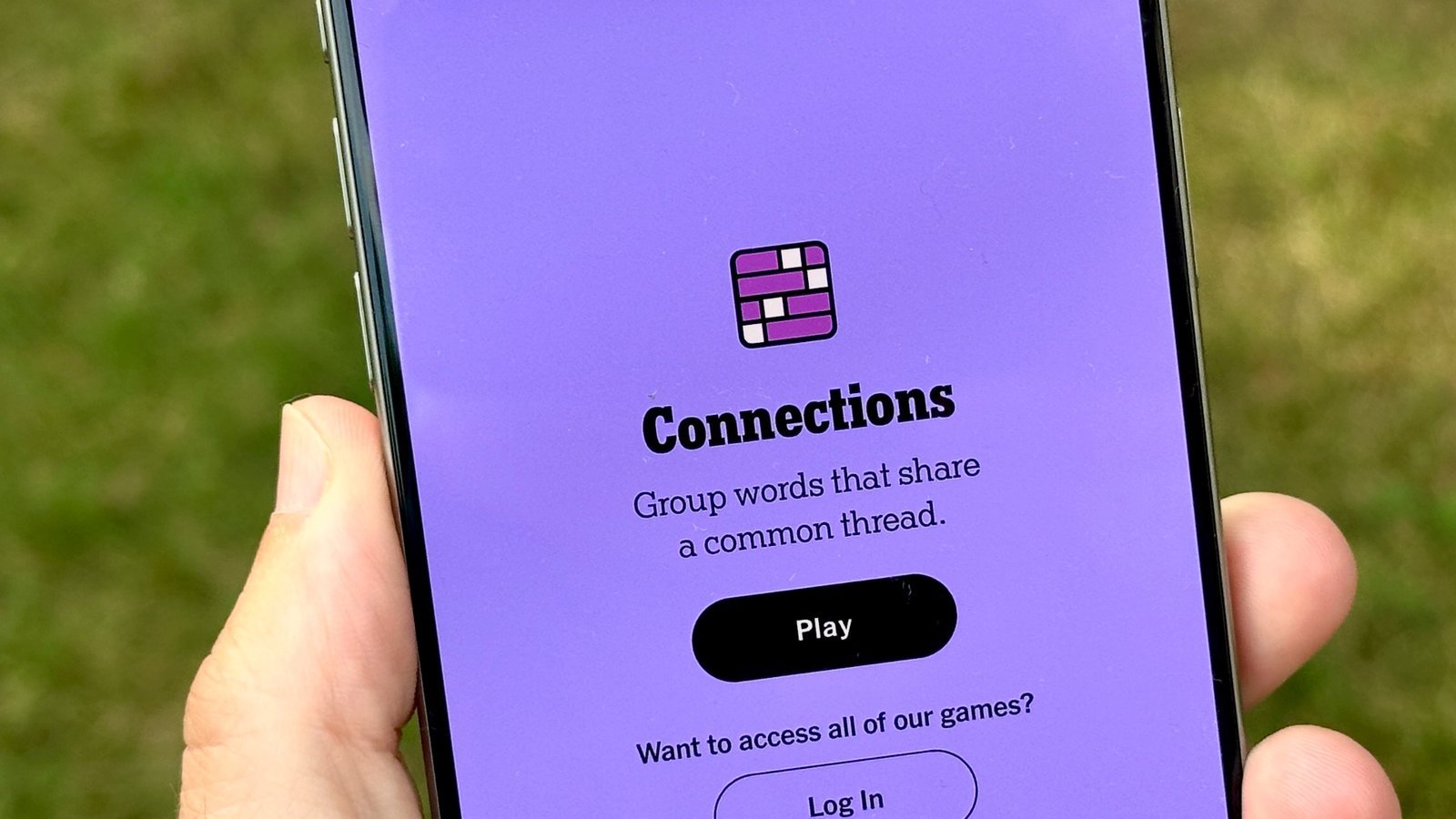
If you’ve ever stared at a grid of seemingly unrelated words, convinced they almost connect but not quite, you’re not alone. That’s exactly where a connections hint becomes your secret weapon. Instead of giving away the answer, it nudges your thinking in the right direction — helping you spot patterns, categories, and hidden relationships you might otherwise miss.
Word association puzzles, especially modern daily grid challenges, test more than vocabulary. They challenge lateral thinking, pattern recognition, and mental flexibility. And when you’re stuck? A subtle clue can mean the difference between frustration and that satisfying “aha!” moment.
Let’s explore how smart hints work, why they matter, and how you can use them to sharpen your puzzle-solving skills without spoiling the fun.
What Is a Connections Hint?
A connections hint is a guiding clue designed to help players identify relationships between grouped words. Instead of revealing the category outright, it provides direction — often suggesting a theme, context, or conceptual link.
For example, imagine you’re given four words:
-
Mercury
-
Venus
-
Earth
-
Mars
A hint might say: “Think beyond mythology.”
That small suggestion redirects your brain toward astronomy rather than Roman gods, helping you realize the words are planets.
The power of a hint lies in suggestion, not solution.
Why Puzzle Solvers Rely on Smart Clues
Puzzle grids are intentionally tricky. Designers mix obvious pairings with subtle traps. Words can belong to multiple categories, and misdirection is part of the challenge.
A well-crafted clue helps you:
-
Shift perspective
-
Avoid overthinking
-
Break mental blocks
-
Save limited guesses
I remember spending nearly twenty minutes convinced four words were related to sports, only to realize — after reading a light directional clue — they were actually types of knots. That tiny reframing completely changed how I looked at the board.
The best hints don’t hand you the answer. They sharpen your thinking.
Common Types of Connections Hints
Not all clues are created equal. Some are broad nudges; others are more specific. Here are the most common styles:
1. Category-Based Hints
These suggest a general grouping theme.
Example:
“Think kitchen tools.”
This narrows your focus without identifying the exact four words.
2. Wordplay Hints
These push you toward puns, prefixes, suffixes, or double meanings.
Example:
“These words can follow ‘paper.’”
Now you’re scanning for compound phrases instead of surface meanings.
3. Contextual Hints
These rely on shared usage in real-world scenarios.
Example:
“Often seen in an airport.”
Suddenly, your brain shifts to signs, luggage, gates, terminals.
4. Elimination Hints
Instead of telling you what to look for, they tell you what not to look for.
Example:
“Ignore literal meanings.”
This forces you to consider figurative or symbolic interpretations.
How to Use a Connections Hint Effectively
A clue is only helpful if you use it strategically. Here’s how to maximize its value:
-
Pause Before Acting
Don’t immediately guess. Reflect on how the clue reframes the board. -
Scan for Secondary Meanings
Many words have multiple definitions. Check for overlap. -
Group Tentatively
Mentally test categories before submitting. -
Avoid Confirmation Bias
If you’re convinced of one grouping, challenge it.
In a real-world scenario, imagine a student preparing for a competitive exam that includes logic puzzles. Practicing with guided clues builds the habit of re-evaluating assumptions — a skill that extends far beyond games.
Subtle vs Direct Hints: What Works Better?
Different solvers prefer different levels of guidance. Here’s a quick comparison:
| Feature | Subtle Hint | Direct Hint |
|---|---|---|
| Level of Guidance | Light nudge | Clear category direction |
| Challenge Retained | High | Moderate |
| Learning Impact | Stronger critical thinking | Faster completion |
| Risk of Spoiler | Very low | Medium |
Subtle guidance preserves difficulty while enhancing insight. Direct hints accelerate progress but may reduce the mental stretch. The ideal balance depends on your goal: improvement or speed.
The Psychology Behind Puzzle Clues
Our brains naturally search for patterns. When presented with random words, we instinctively cluster them based on familiarity. However, puzzles exploit this tendency.
A smart directional clue works because it:
-
Interrupts fixed thinking
-
Activates alternative neural pathways
-
Encourages abstract association
This is why stepping away from a puzzle sometimes helps. When you return, your subconscious has already reorganized the data.
Avoiding Over-Reliance on Hints
While guidance can be helpful, leaning on it too often may slow long-term skill development. Consider this approach:
-
Attempt the puzzle independently first
-
Use a clue only after genuine effort
-
Review why the grouping worked
Over time, you’ll notice patterns becoming easier to detect. You’ll start predicting categories before you even need assistance.
Advanced Strategy: Think in Layers
Expert solvers don’t just look for obvious connections — they analyze words in layers:
-
Literal Meaning
-
Slang Usage
-
Prefixes or Suffixes
-
Cultural References
-
Sound Similarities
For example, four unrelated-looking words might share a silent letter pattern or rhyme scheme. Without a strategic mindset, these subtleties are easy to miss.
The key isn’t just using a connections hint — it’s understanding why it worked.
How Daily Practice Improves Pattern Recognition
Consistency matters. Solving one grid per day strengthens:
-
Vocabulary recall
-
Flexible thinking
-
Analytical speed
-
Decision-making under constraints
Over weeks, you’ll find that categories feel more intuitive. You’ll recognize traps faster. And when you do use a clue, you’ll extract more value from it.
The true advantage isn’t finishing faster — it’s thinking sharper.
When Should You Use a Hint?
Use guidance when:
-
You’ve tested multiple groupings unsuccessfully
-
You’re stuck on one final category
-
Time constraints matter
-
You want to understand the logic rather than guess randomly
Avoid it when:
-
You’ve only glanced at the board
-
You’re feeling impatient
-
You haven’t explored alternate meanings
Smart use builds skill. Impulsive use weakens it.
The Bigger Benefit: Mental Agility
Beyond entertainment, puzzle-solving enhances cognitive flexibility. The ability to reframe problems quickly is valuable in business, academics, and everyday decision-making.
A simple grid of words becomes a training ground for sharper thinking.
That’s what makes strategic clue usage powerful — it teaches you how to think, not just what to answer.
Read More: Wordle Game Guide: Tips, Strategy & History
Conclusion
A well-crafted connections hint is more than a shortcut — it’s a cognitive catalyst. It nudges your brain toward alternative perspectives without removing the challenge. Whether you’re solving daily word grids for fun or sharpening your analytical skills, using clues strategically can dramatically improve both enjoyment and performance.
The next time you’re stuck, don’t see a hint as a weakness. See it as a tool — one that, when used wisely, turns confusion into clarity and frustration into insight.
Keep solving. Keep stretching your thinking. And most importantly, keep connecting the dots.
FAQs
What does a connections hint actually do?
It guides players toward identifying shared themes or patterns among words without directly revealing the answer.
Are hints considered cheating?
Not necessarily. If used sparingly, they enhance understanding rather than replace effort.
How can I improve without relying on clues?
Practice daily, analyze mistakes, and review completed puzzles to understand pattern logic.
Why are connection puzzles so tricky?
Many words belong to multiple categories, and designers intentionally include misleading associations.
Do subtle hints work better than direct ones?
Subtle guidance often strengthens critical thinking, while direct clues speed up completion.